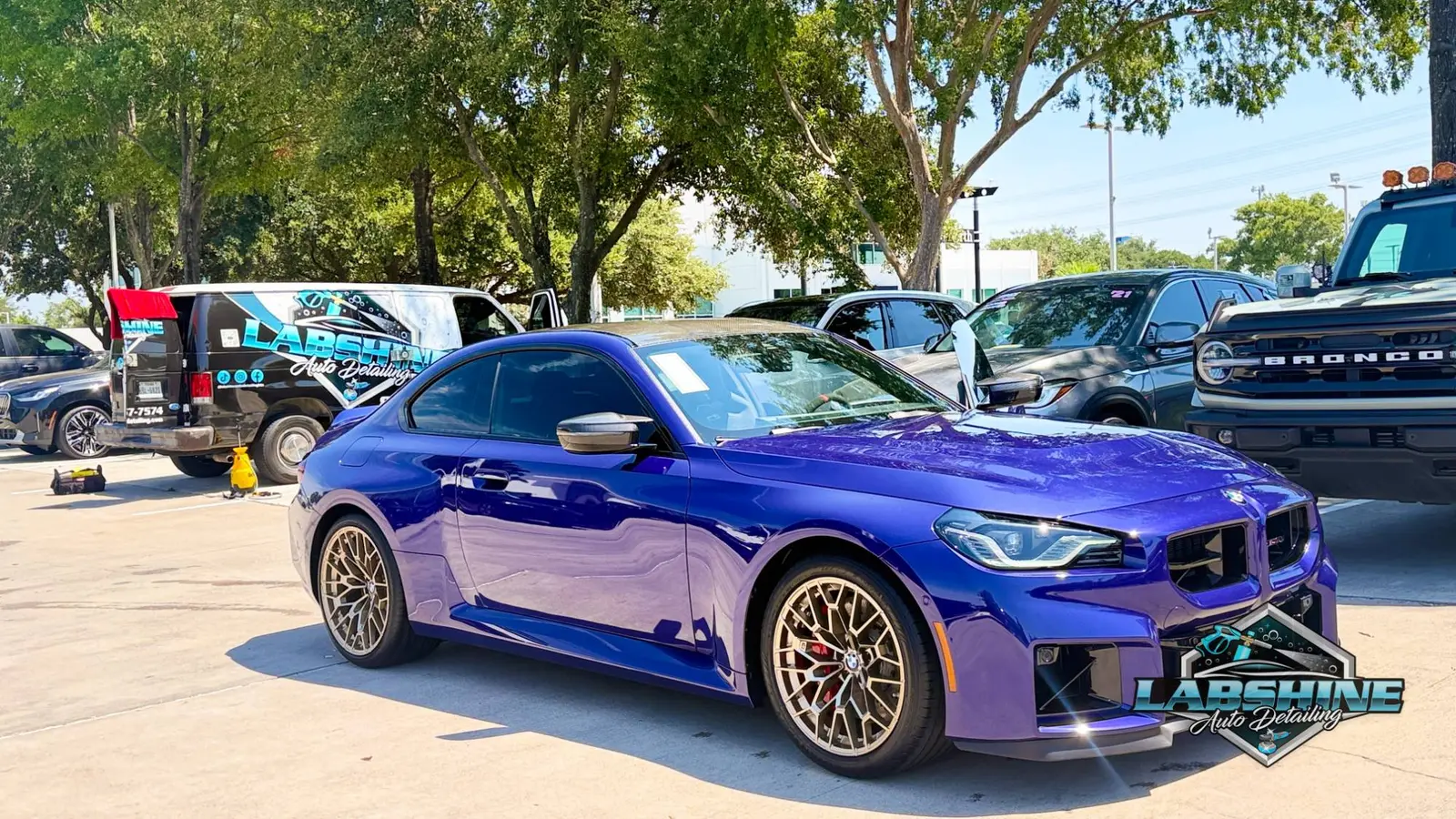
You just drove off the lot in a new car. It looks perfect — glossy, flawless, like it'll stay that way forever. But here's what the dealership doesn't tell you: that paint is completely unprotected the moment you leave the lot, and Houston's environment will start working on it immediately.
The Dealership Prep Is Not Protection
Most dealers apply a basic spray wax or surface dressing before delivery. It looks good for photos and the test drive, but it's not real paint protection. It'll last a few weeks in Houston's heat before washing off completely.
Some dealers try to sell you their own "paint protection package" — often a dealer-applied coating that costs $500–$1,500 and is not the same as a professional ceramic coating. These products are typically applied by untrained staff, over paint that hasn't been properly decontaminated or polished, and they carry warranties that are hard to claim.
How to evaluate a dealer protection package in two questions
You don't need to be an expert to pressure-test the offer at the finance desk. Ask:
- "Is the paint being decontaminated and polished before the product goes on, and by whom?" If the answer is vague, the product is going onto whatever condition the paint arrived in — including any wash marring picked up in the lot's prep bay.
- "What specifically voids the warranty, and what's the claim process?" Many dealer packages require documented maintenance at set intervals. If you can't meet the schedule, the coverage is theoretical.
A dealer package isn't automatically bad. But it is usually sold as a finance line item rather than as detailing work, and it's worth knowing which one you're buying.
What Happens to New Car Paint in Houston
Within the first 6 months on a new car with no paint protection:
- Week 1–2: Dealership spray wax begins washing off
- Month 1: Bird droppings, tree sap, and road tar start making contact with bare clear coat
- Month 2–3: Microscopic swirl marks begin forming from car washes, parking lot brushes against other cars, and improper drying technique
- Month 6: In Houston UV, clear coat oxidation begins on areas with consistent sun exposure
- Year 1–2: Paint that started flawless now shows swirls visible in direct sunlight, possible water spot etching, and dulling of gloss
This happens to every unprotected car in Houston. It's not a question of if, it's a question of how fast.
New does not mean flawless
This surprises people: brand-new paint frequently arrives with defects. Vehicles are shipped by rail and truck, sit on lots for weeks, and get washed by whoever is available before delivery. The common findings are rail dust and industrial fallout embedded in the finish, transport film adhesive residue, and light buffer trails or wash marring from lot prep. None of it is a scandal — it's just what happens between the factory and your driveway. But it's exactly why "it's new, it doesn't need anything" is the wrong assumption, and why a decontamination and inspection should happen before any coating is applied.
Why New Car + Ceramic Coating Is the Best Combo
When you apply ceramic coating to a brand-new car, you start with paint that is as good as it will ever be. Little or no correction is needed, which means you're paying for protection rather than for restoration. You lock in that factory finish under a semi-permanent protective layer that:
- Blocks UV from degrading the clear coat
- Repels water, bird droppings, and tree sap so they don't sit and etch
- Creates a surface harder than the paint itself (9H hardness on professional coatings)
- Makes washing take half the time because contaminants don't bond to the surface
- Preserves resale value — paint condition is the most visible factor in how a used car presents
There's a cost argument here that gets overlooked. Coating a new car is the cheapest coating you will ever buy, because the expensive part of a coating job on an older vehicle is the correction that has to happen first. Wait three years and you may need the Lab Correction Detail, from $750, before adding protection.
What About PPF (Paint Protection Film)?
PPF (also called clear bra) is a thick transparent film applied over the paint — most commonly on the front bumper, hood, mirrors, and rocker panels, which are the highest-impact areas for rock chips and road debris. PPF is the only product that physically blocks paint chips.
Ceramic coating and PPF solve different problems and are not alternatives to each other. Coating is chemical and UV protection across the whole vehicle; film is physical impact protection on specific panels. For maximum protection: PPF on impact zones plus ceramic coating over everything else. This is the setup worth considering for trucks, luxury cars, or anyone commuting on I-10, 290 or the Grand Parkway, where construction gravel is a constant.
What New Car Detailing Includes
A proper new car detail before ceramic coating involves:
- Full decontamination wash — remove any transport wax, lot dust, rail dust, and fallout from the dealership
- Clay bar treatment — pull any embedded contamination out of the paint before sealing it in
- Light paint correction or enhancement (if needed) — new cars can have buffer marks or light swirls from dealer prep. We remove these before coating so you start with a truly clean surface
- Surface prep — a panel wipe to strip polishing oils, so the coating bonds to paint rather than to residue
- Ceramic coating application — panel by panel, in a shaded environment, with a proper cure time
Our Paint Enhancement + 7-Year Ceramic package is $699 and includes the enhancement stage, which is the right level for most new vehicles.
Don't forget the interior on day one
New interiors are the easiest interiors to protect and the ones people ignore, because nothing is wrong yet. In Houston that's a mistake: dashboards and door tops take direct sun for years, leather dries out in this heat, and the first coffee spill in an untreated cloth seat sets a stain that has to be extracted later. A protectant applied to leather and vinyl before the sun has had a chance to work on them is the difference between a dash that looks new at year five and one that's faded and hard. Adding window tint, from $150, does more for interior longevity than any product you can apply to the surfaces themselves, because it addresses the cause instead of the symptom.
Timing Matters
The sooner after purchase, the better. Every day your new car sits unprotected in Houston's sun and humidity is a day the paint is taking damage. The ideal window is within the first 2 weeks of ownership — before anything has a chance to bond to the paint and require more correction work before coating.
One practical note: if you're taking delivery, skip the dealership's complimentary car washes afterward. Tunnel washes and lot rewashes are where most new-car swirl marks originate, and they can undo in one pass what the coating was bought to prevent. Detail on how to wash a coated car properly is worth ten minutes of your time.
LabShine New Car Protection in Houston
We install new car ceramic coatings across the Houston metro — Katy, Cypress, Sugar Land, The Woodlands, Pearland and Houston proper. We come to you — your driveway, your office, wherever is convenient — so a new car never has to go back to a lot to get protected.
See current numbers on the pricing page, or get a free quote and we'll walk you through exactly what's right for your car.